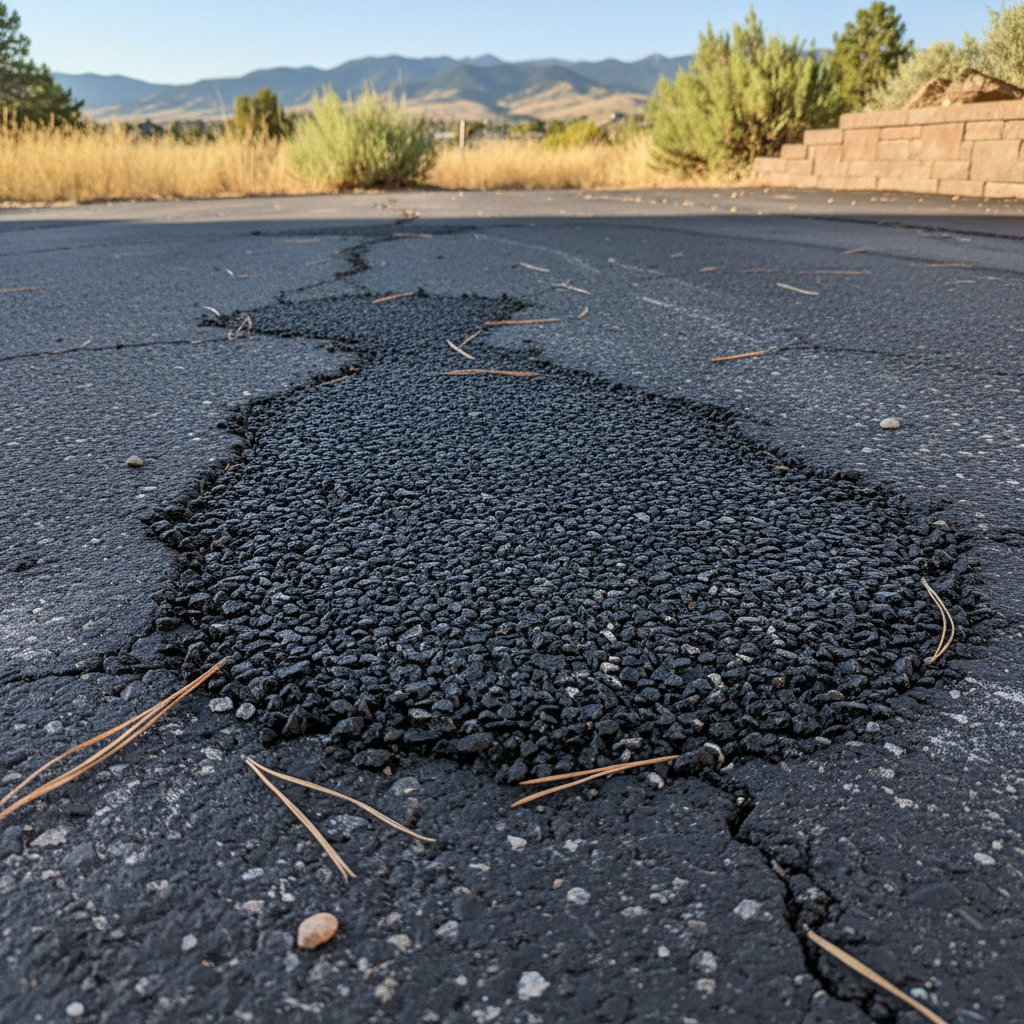
Got a pothole or a nasty crack staring back at you from your driveway? It's a common sight around Fort Collins, especially after a winter with freeze-thaw cycles that just wreak havoc on pavement. You're probably wondering if it's something you can fix yourself or if you need to call someone like me.
Let's break down asphalt patching for homeowners. It's not rocket science, but there are definitely right ways and wrong ways to go about it. And sometimes, trying to DIY can end up costing you more in the long run.
Before You Patch: Assess the Damage
First thing's first: take a good, hard look at what you're dealing with. Not all damage is created equal.
- Small Cracks (under 1/2 inch wide): These are often surface-level. You can usually fill these yourself with a good quality crack filler. It's like caulking for your driveway.
- Larger Cracks (over 1/2 inch wide) or Alligator Cracking: This is where it gets trickier. Alligator cracking (lots of interconnected cracks that look like an alligator's skin) usually means there's a problem with the base layer underneath. Filling the cracks might be a temporary band-aid, but the underlying issue will likely resurface.
- Potholes: These are depressions where the asphalt has completely broken away. Potholes can range from small divots to craters. A small, shallow pothole might be a DIY candidate, but anything deep or wide usually requires more serious attention.
- Edge Deterioration: If the edges of your driveway are crumbling, it could be a sign of poor drainage or an unstable base. Patching here needs careful consideration.
Think about the cause, too. Is it just wear and tear? Or is water pooling in one spot, constantly eroding the asphalt? Fixing the drainage problem first will save you from patching the same spot repeatedly.
DIY Patching: What You Can Realistically Do
For those smaller cracks and very shallow potholes, you can absolutely give DIY patching a shot. Here's what you'll need and the basic steps:
- Materials: You'll want a good quality asphalt crack filler for cracks, or a cold patch asphalt repair mix for potholes. Make sure it's designed for driveways and read the instructions carefully. A tamper tool (or even just a heavy piece of wood) is essential for compacting cold patch.
- Clean It Up: This is crucial. Get all the loose debris, dirt, and vegetation out of the crack or pothole. Use a wire brush, a stiff broom, or even a leaf blower. If there's standing water, dry it out completely.
- Fill the Crack: For crack filler, just apply it slowly and evenly into the crack. Don't overfill; you want it flush with the surface.
- Fill the Pothole: For cold patch, shovel it into the hole, slightly overfilling it. Then, compact it down as much as you possibly can. Drive over it with your car a few times if the patch is solid enough. The goal is to make it dense and level with the surrounding pavement.
- Cure Time: Follow the product's instructions for drying or curing time before driving on it.
This kind of repair is best for keeping small problems from becoming big ones. It's preventative maintenance, really.
When to Call a Pro (Like Us)
Now, for the honest truth: there are plenty of situations where DIY patching just isn't going to cut it, or it's a waste of your time and money. Here’s when you should pick up the phone:
- Large or Deep Potholes: If a pothole is more than a couple of inches deep or wider than a dinner plate, a cold patch isn't going to hold up for long. We've got the hot asphalt and heavy equipment to do a permanent repair.
- Extensive Alligator Cracking: As I mentioned, this points to a base problem. We need to cut out the affected area, address the base, and then lay down new asphalt. Just filling the cracks is like putting a band-aid on a broken leg.
- Multiple Patches Needed: If your driveway looks like a patchwork quilt, it might be more cost-effective and certainly look better to consider a larger section repair or even an overlay.
- Structural Issues: If your driveway is sinking, heaving, or has significant drainage problems, a patch won't solve it. You need an expert to diagnose and fix the root cause.
- Time and Effort: Let's be real, your time is valuable. If you'd rather spend your weekend hiking Horsetooth or enjoying Old Town than wrestling with cold patch, that's a perfectly good reason to call us.
We see a lot of driveways in Fort Collins, from the older homes in the Lincoln Park neighborhood to the newer builds out east. The soil here can be expansive, and our weather swings are tough on asphalt. A proper patch, done with hot asphalt and the right compaction, integrates seamlessly and lasts much longer than a temporary fix.
At Precision Asphalt Fort Collins, we're set up to handle everything from small cut-and-patch repairs to full driveway replacements. We'll give you an honest assessment of what your driveway needs and what the best solution is, whether it's a quick fix or something more substantial. Don't hesitate to reach out if you're unsure. A little advice now can save you a lot of headache later.