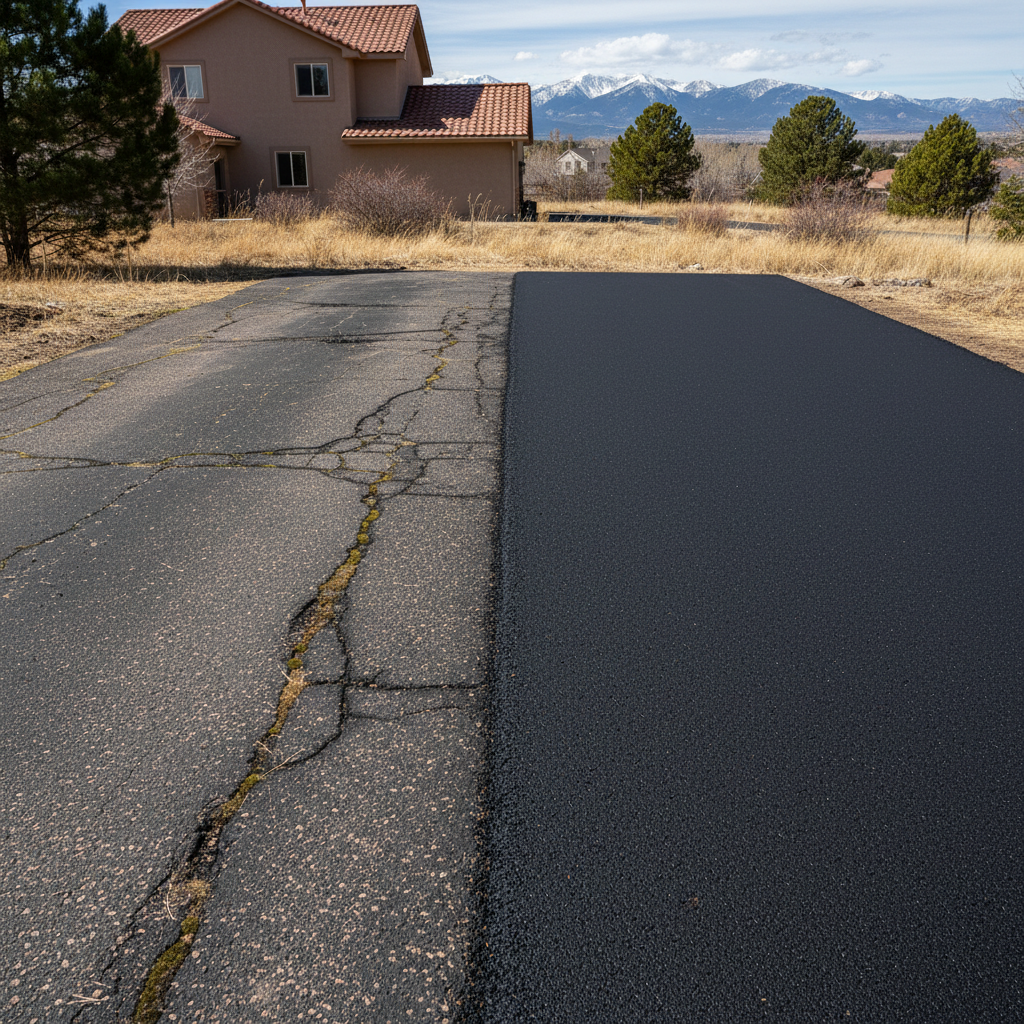
So, your asphalt driveway's seen better days, huh? You're probably looking at it, seeing cracks, maybe some potholes, and wondering if you need to rip it all out or if there's an easier fix. It's a common question I get from homeowners all over Fort Collins, from the older homes in Old Town to the newer builds out by Harmony Road. You essentially have two main routes: a full-depth replacement or an asphalt overlay. Let's talk about what each one means for your wallet, how long it'll last, and what kind of upkeep you're signing up for.
Full-Depth Replacement: The Brand New Start
This is exactly what it sounds like. We come in, tear out your old driveway completely – base and all. Then we prepare the subgrade, lay down a fresh aggregate base, and finally, pave a brand-new layer of asphalt. Think of it like building a new road from scratch, just on a smaller scale.
Cost
Let's not beat around the bush: this is the more expensive option, usually by a fair margin. You're paying for the demolition, the hauling away of all that old material, and then all the new material and labor to build it back up. It's an investment, for sure. But you're getting a completely new product.
Durability
When done right, a full-depth replacement is the most durable option. You're starting with a fresh, stable base, which is crucial for longevity. This means it's less likely to develop problems from underlying issues that might have plagued your old driveway. You're looking at 20-30 years, sometimes more, with proper maintenance. It handles our freeze-thaw cycles here in Northern Colorado much better because everything is new and properly compacted.
Maintenance
Initially, maintenance is minimal beyond regular cleaning and keeping heavy vehicles off it for the first few days. However, just like any asphalt, it'll need sealing every few years to protect it from the sun and moisture. Cracks will eventually appear, and you'll want to get those filled to prevent water from getting into the base.
Appearance
It's a brand-new driveway. It looks fantastic. Smooth, dark, uniform. It'll boost your curb appeal immediately, no question.
Asphalt Overlay: The Resurfacing Option
An overlay, or resurfacing, is where we clean and prep your existing asphalt, repair any major trouble spots, and then lay a new layer of asphalt right on top of it. It's like putting a fresh coat of paint on a wall, but with asphalt.
Cost
This is typically the more budget-friendly choice. You're saving on demolition and disposal costs, and often on base material. If your existing driveway's base is still solid, an overlay can give you a lot of bang for your buck.
Durability
Here's the catch: an overlay is only as good as what's underneath it. If your existing driveway has significant structural issues – widespread alligator cracking, deep potholes from a failing base – an overlay will just mask those problems for a short time. Those cracks will eventually reflect through the new surface. If your base is solid and you just have surface wear and tear, an overlay can last 10-15 years. But if the underlying issues are bad, you might only get 5-7 years before you're looking at more serious repairs.
Maintenance
Similar to a new driveway, you'll need regular sealing and crack filling. The critical thing with an overlay is to address any reflective cracking quickly. If those old cracks start showing through, seal them up fast to protect the base.
Appearance
A fresh overlay looks great initially – smooth and black. It definitely improves curb appeal. But, as mentioned, if underlying issues exist, you might see cracks reappear sooner than with a full replacement, which can detract from the look over time.
My Recommendation for Fort Collins Homeowners
Alright, so what's the deal for us here in Fort Collins? Our climate, with its hot summers, cold winters, and those dramatic freeze-thaw cycles, is tough on pavement. We also have some interesting soil conditions, especially in areas like the older parts of Fort Collins with clay soils, which can shift and impact driveway bases.
If your driveway is showing extensive alligator cracking, large potholes, or significant dips and humps that indicate a failing base, I'm going to tell you straight up: a full-depth replacement is almost always the better long-term solution. You'll spend more upfront, but you'll get a driveway that's built to last and won't give you headaches from underlying issues. It's the most reliable way to handle our local weather and soil challenges.
However, if your driveway is generally sound, has a good base, and just has surface wear, minor cracking, or fading, then an asphalt overlay is a fantastic, cost-effective option. It'll give you a beautiful, new surface and extend the life of your driveway significantly without the higher price tag of a full tear-out. We do a lot of overlays for folks whose driveways are just looking tired but aren't structurally compromised.
The best way to figure out which is right for you? Have a professional, like us at Precision Asphalt Fort Collins, come take a look. We'll assess your specific driveway, consider the underlying conditions, and give you an honest recommendation based on what we see. We'll tell you if an overlay is a smart move or if you'd be throwing good money after bad. It's about getting the right solution for your home and your budget, not just the most expensive one.